The Problem
Healthcare teams must respond rapidly to high-acuity, low-occurrence (HALO) events — rare but critical situations where performance matters most. Yet the chances to train together for them, in a meaningful and accessible way, are often scarce.
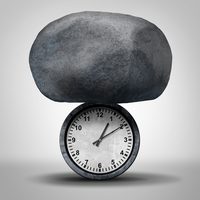
Traditional simulation is valuable but hard to access and sustain: it's typically infrequent, resource-intensive, and delivered away from the clinical environment. It can also feel high-stakes, and in mixed professional groups, hierarchy and fear of judgement can hold people back. Add the day-to-day pressure of releasing staff from a busy ward, and the teams who would benefit most are too often the ones who miss out.


The Solution
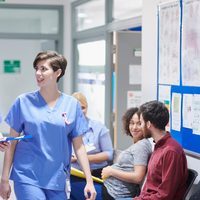
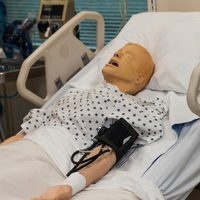
Spin for SIM™ is a low-fidelity, high-frequency, in-situ simulation model that embeds learning directly into the clinical workplace. Simulations are brief — around 10 minutes — opportunistic, and multidisciplinary, so a wide range of staff can take part without protected time or preparation. At its centre is a simple but powerful mechanism: a spinning wheel that randomly selects the emergency scenario. That randomness mirrors real practice, removes the need to prepare, and — because nobody is the designated expert — flattens hierarchy and builds shared ownership across the team.
"Educational snacking rather than educational feasting."
Explore the educational foundations →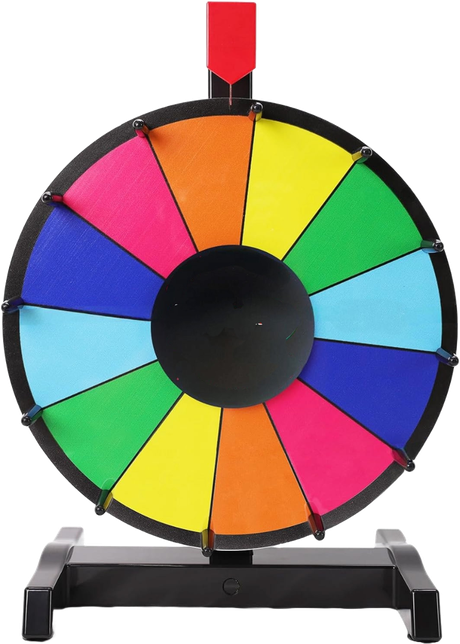
How It Was Developed
Spin for SIM™ was designed, produced and formatted by Dr Lucinda Whitton, originally on a delivery suite, with the aim of embedding regular multidisciplinary training into the culture of the workplace. Each themed category is supported by a set of pre-prepared scenarios — written start to finish with clear timings, learning outcomes, facilitator prompts, debrief guidance and recommended resources.
Crucially, every scenario has been developed and vetted with relevant educational stakeholders within each discipline. Although it began in maternity, the model is designed to adapt to any setting where teams face time-critical, high-acuity events — theatres, emergency departments, critical care and acute wards.
The Results
Across six categories, in the early months of the pilot, here's what we've seen so far:
I've been a midwife for 12 years and this is the first simulation I've actually enjoyed. It felt safe to get things wrong.
The random wheel totally changes the dynamic. Nobody's the expert. We're all figuring it out together.
We ran three sessions in one shift — 10 minutes each. That has never been possible before.
If people do not feel safe to speak, they cannot learn — and they cannot keep patients safe.
With Thanks
Spin for SIM™ is the product of many people's expertise. Scenario content has been created and vetted by clinical colleagues across disciplines, whose generosity makes the programme possible.
For more information about the people behind Spin for SIM™, visit the Team page.
Facilitator Toolkit
A full facilitator toolkit — guide, ground rules, scenario structure, debrief prompts and feasibility tips — is in preparation and will be available here soon.