This toolkit is written for the person leading the rollout — a trust lead, educator, or facilitator champion. Work through it in order the first time, then dip back into the chapter you need. Everything here pairs with the free posters, emails and kit on the Resources page.
Why Spin for SIM?

Teams are expected to manage high-acuity, low-occurrence (HALO) emergencies flawlessly — the rare moments when coordinated multidisciplinary working matters most. Yet the chance to rehearse those moments together is often the first thing squeezed out of a busy week.
Traditional simulation is valuable but hard to sustain: it tends to be infrequent, resource-heavy, booked away from the clinical area, and dependent on faculty, kit and protected time. It can also feel high-stakes — a test to be passed rather than a chance to learn — which quietly excludes the very people a real emergency would need in the room.
What Spin for SIM does differently
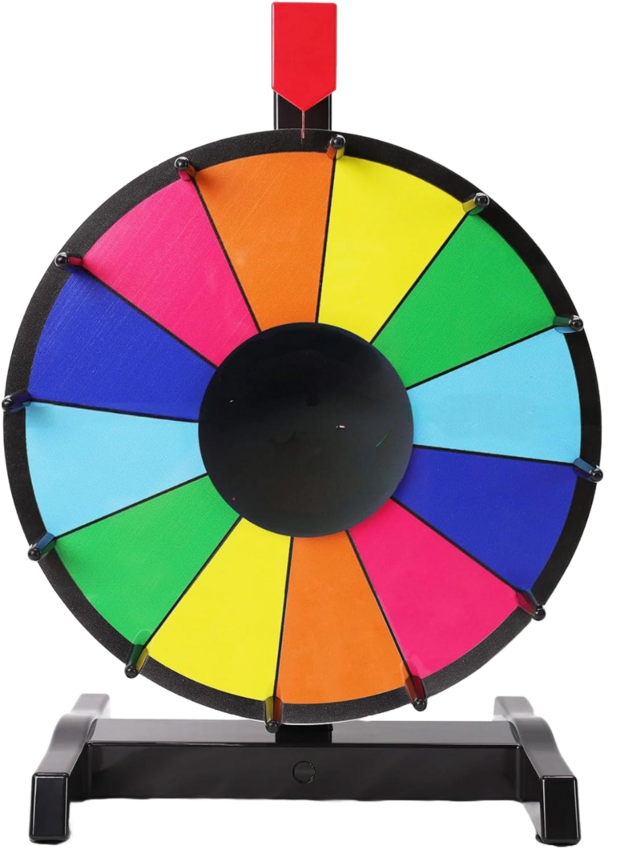
Spin for SIM is low-fidelity, high-frequency, in-situ simulation. Short (around 10 minutes), opportunistic, and run where care actually happens. A spinning wheel picks the scenario at random, so nobody prepares in advance and everyone — including the facilitator — shares the same uncertainty. That randomness flattens hierarchy, and the deliberately informal, low-tech set-up keeps the stakes low and the focus on teamworking, communication and escalation.
Done regularly, it stops being an event and becomes a habit — a continuous cycle of Spin → Scenario → Team → Debrief → Learning → Repeat woven into the working day. The goal isn't a perfect performance; it's a team that's more confident, communicates more openly, and escalates more safely when it counts.
Before you begin
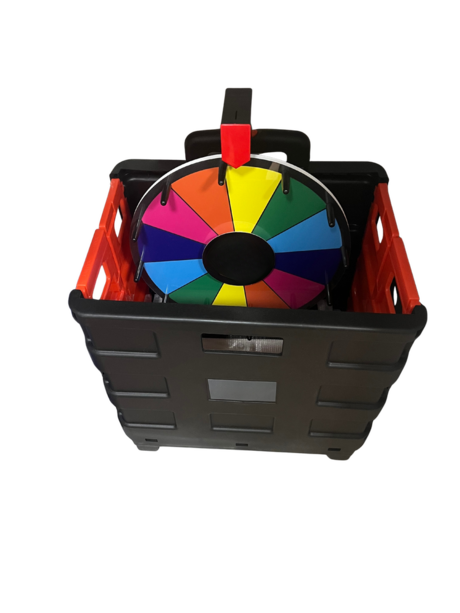
You don't need much to start — but a little groundwork makes the difference between a launch that fades and one that sticks. Aim to have these five in place before your launch date.
- 1Secure executive supportName a senior sponsor (clinical director, head of midwifery, or matron) who will publicly back the rollout and, ideally, attend the first session. Their visible buy-in is what gets consultants and busy teams to engage.
- 2Identify a Trust LeadOne person who owns the rollout: sets the launch date, holds the kit, keeps an eye on the dashboard, and is the point of contact. This doesn't need to be senior — it needs to be someone who cares and will follow through.
- 3Identify a facilitator poolStart with three to six facilitators across professions and shifts so cover never depends on one person. Facilitators complete the short training on the platform first (watch the walkthrough, pass the questions). Anyone can grow into it — facilitating is about holding the space, not knowing every answer.
- 4Choose a launch datePick a specific week and make it visible. A named "Spin for SIM™ Week" gives the rollout momentum and a moment to celebrate. Avoid the busiest known periods, but don't wait for the perfect quiet week — it never comes.
- 5Get the kit and platform readyPrint the ground-rules and feedback posters, stickers and facilitator badges from Resources, and have the box ready (wheel, teddy, scenario cards). Confirm your trust code is set up so feedback is tagged correctly and shows on your dashboard.
Launch week
Make it a Spin for SIM™ Week
Give your launch a name and a bit of fanfare. Spin for SIM™ Week cupcakes with wheel toppers, stickers and a team photo turn “another training thing” into an event people remember — and want to repeat. Bake them, badge them, and celebrate the teams taking part.
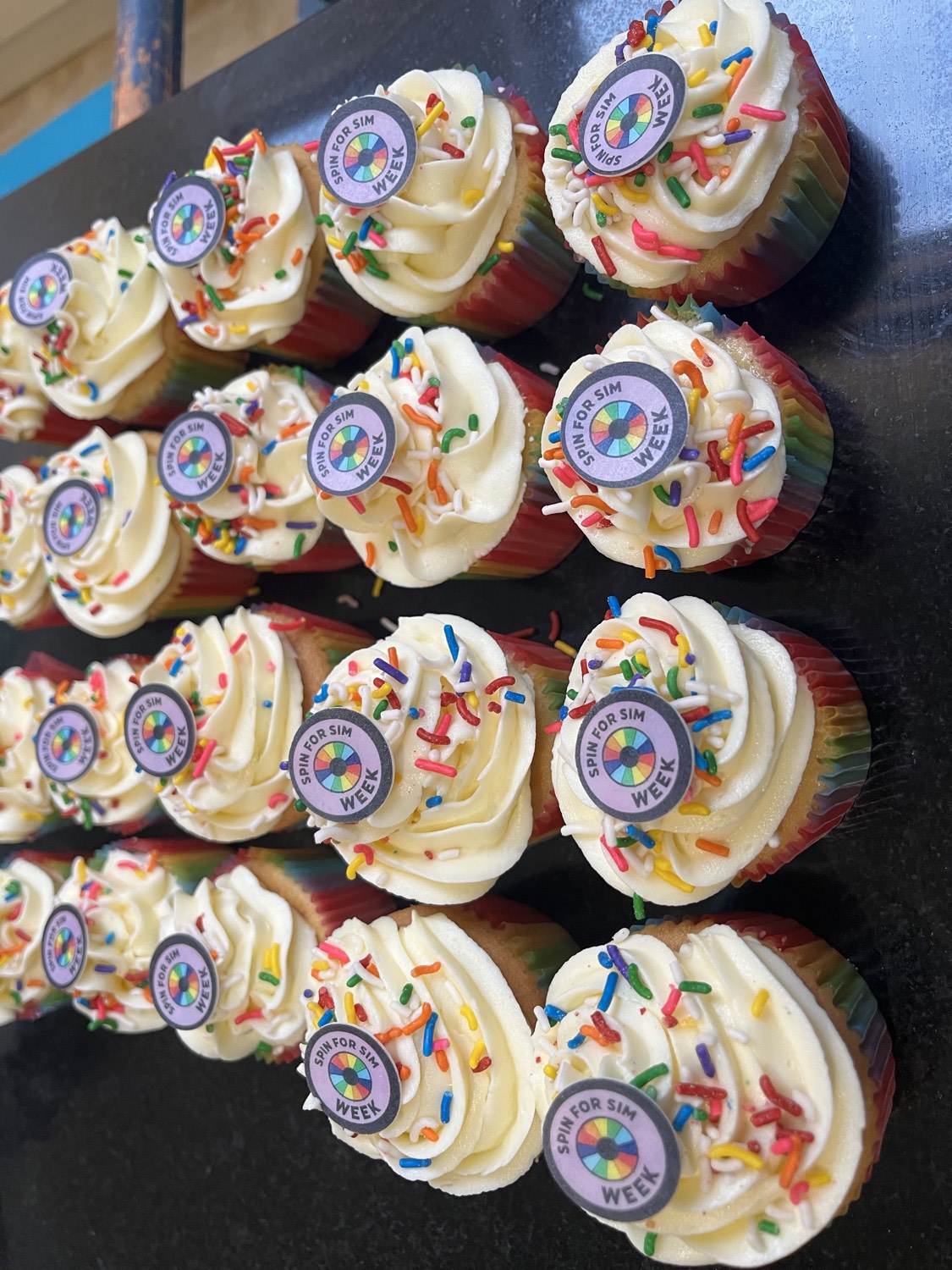
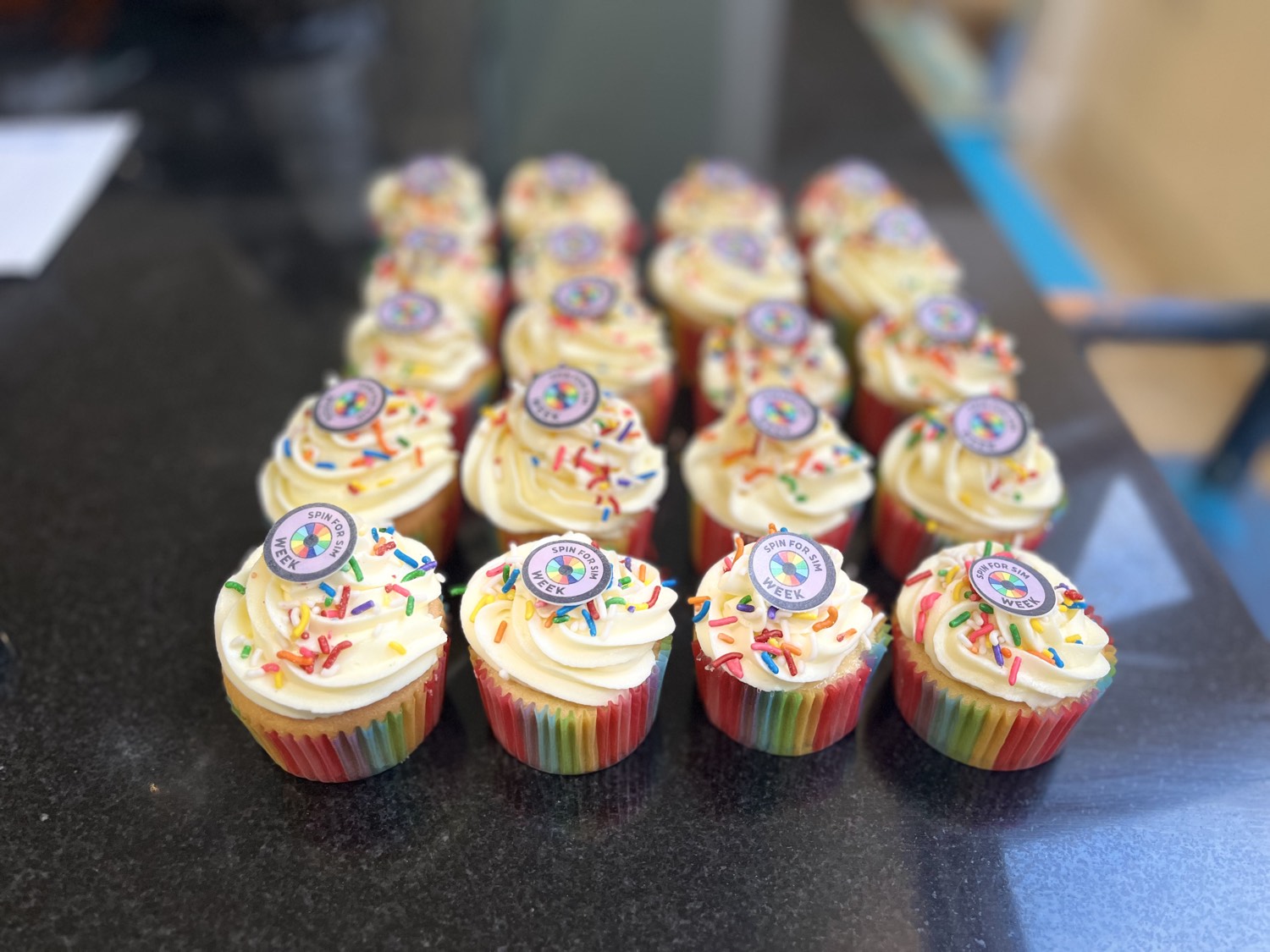
Exactly what happens, day by day. Keep each action small. The aim of week one is simply to prove it's possible, visible, and enjoyable — not to hit a numbers target.
- Send the launch / welcome message (editable email & WhatsApp copy on Resources).
- Put the posters up where the team gathers.
- Mention it at the board round: “We start Spin for SIM™ this week.”
- Share the psychological safety pulse. Ask the Spin for SIM™ co-leads to open the pulse window for your launch week, then share the QR / link from your dashboard with the whole team on day one, before any sessions begin — this captures your baseline to measure against later. About the pulse ›
- Run the first session — with the executive sponsor present if you can.
- Read the ground rules; spin; run ~10 minutes; debrief.
- Participants scan the start & end QR codes (confidence before/after).
- Run two short sessions across different shifts so days and nights both see it.
- Share one quick win on the team chat (“APH in 9 minutes — great escalation”).
- Deliberately include a wider profession — theatre, neonatal, HCA, student.
- Invite one reluctant consultant by name; keep it light.
- Celebrate — cupcakes, cake topper, stickers, a thank-you to the team.
- Share week-one numbers (sessions run, professions involved).
- Recruit the next one or two facilitators while energy is high.
If a planned session can't happen because the unit is too busy, that's fine — defer it. A brief or partially completed session still counts as a win in week one.
Keeping momentum
The first week is the easy bit. These four habits are what carry Spin for SIM™ from a launch into a culture. Pick the ones that fit your unit — you don't need all four to start.
Common barriers

Almost every objection has a small, practical answer. When something stalls, reach for the fix — don't abandon the model.
Data collection
Record little, but record it every time. Most of this is captured automatically when participants scan the QR codes — keep the manual bits to a quick note. The golden rule: every session is tagged with your trust code, so it lands on the right dashboard.
For each session quick note
- Date and clinical area
- Scenario that came up on the wheel
- Who facilitated
- Number of participants
- Professions in the room
- Roughly how long it took
From each participant automatic via QR
- Start QR — confidence in this scenario before (1–5)
- End QR — confidence after (1–5)
- Their role / profession
- Overall rating and would-recommend
- One thing they learned (optional)
Quarterly: the psychological safety pulse
Once every three months, share your trust's psychological safety pulse with the whole team — a short, anonymous, seven-item check (adapted from Edmondson) plus a quick "how many Spin for SIM™ sessions have you done this month?". Run it at launch for a baseline, then quarterly. Your QR code never changes (find it on your dashboard) and responses bucket themselves by quarter automatically, so there is nothing for you to set up. The collection window is opened regionally by the Spin for SIM™ co-leads, so every trust runs the same fortnight and the results are genuinely comparable — your dashboard tells you when it is open, and that is your cue to share the link and put the posters back up. It then shows psychological safety by quarter, and how it compares between people who have and haven't been taking part.
Resist the urge to collect more. Light-touch data that's actually recorded beats a detailed form nobody fills in.
How to know it's succeeding
Confidence change is a great outcome — but on its own it won't tell you whether Spin for SIM™ has actually embedded. Implementation is about behaviour and reach. Watch these eight signals instead.